





.BqrL9sgF_1jVnGp.webp)
- 23 Jan, 2026
- Software Development
- By Musketeers Tech
Software Co-Development: Complete Partner Guide
Building software is rarely a solo sport anymore—especially when you’re shipping fast, hiring is slow, or your roadmap demands specialized skills (AI, DevOps, mobile, security). That’s where co development software comes in: a delivery approach (and supporting tooling) that lets your internal team and an external partner build together with shared responsibility, shared workflows, and shared outcomes.
This guide is for founders, product managers, and delivery leaders evaluating co-development vs. classic outsourcing or a dedicated development team. We’ll define how co-development works in practice, what to expect operationally (roles, rituals, artifacts), the tools that keep collaboration from falling apart, and the contract/security items teams often miss until it’s painful.
TL;DR
Co-development = one backlog, shared decision rights, shared quality bar. It accelerates delivery while keeping product control in-house. Success hinges on governance, security baseline, and a disciplined toolchain.
What is co development software?
Co-development software typically refers to two things:
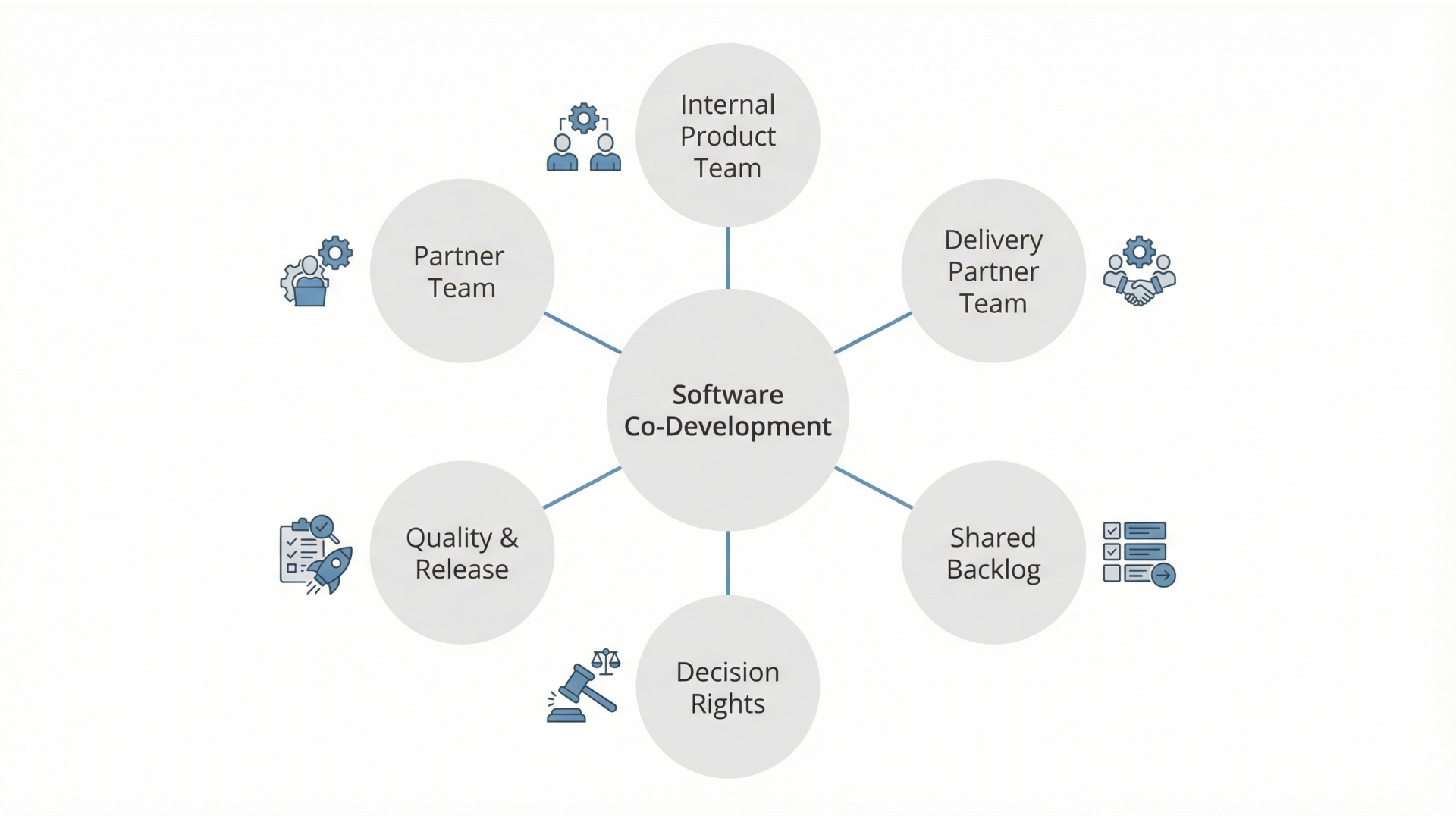
- A collaboration model where your in-house team and a partner team jointly build one product, sharing planning, architecture decisions, and delivery accountability.
- The toolchain that enables that joint delivery—version control, CI/CD, issue tracking, docs, design collaboration, and secure environments.
What it isn’t:
- Body leasing without ownership
- Traditional outsourcing handoffs
- Open-source collaboration (similar mechanics, different legal/security needs)
A useful mental model: one backlog, one definition of done, one release cadence—multiple teams.
If you’re still deciding between models, start with our nearshore software development guide to compare collaboration styles and time-zone overlap options.
Why co development software matters
- Faster time-to-market with fewer bottlenecks: parallel workstreams without sequential handoffs.
- Broader expertise on demand: pull in cloud, data, security, or mobile specialists as needed.
- Higher product fit: tighter feedback loops between stakeholders and builders.
- Risk distribution: less dependency on a single team or “hero engineer.â€
- Operational uplift: shared standards (code review, CI/CD, monitoring) raise the bar org-wide.
Security baseline matters
Agree on a secure development baseline (e.g., NIST SSDF or OWASP SAMM) and enforce it via CI/CD gates—from SAST/DAST to dependency scanning and IaC checks.
External reference: NIST SSDF https://csrc.nist.gov/Projects/ssdf
How co-development works: a practical operating model
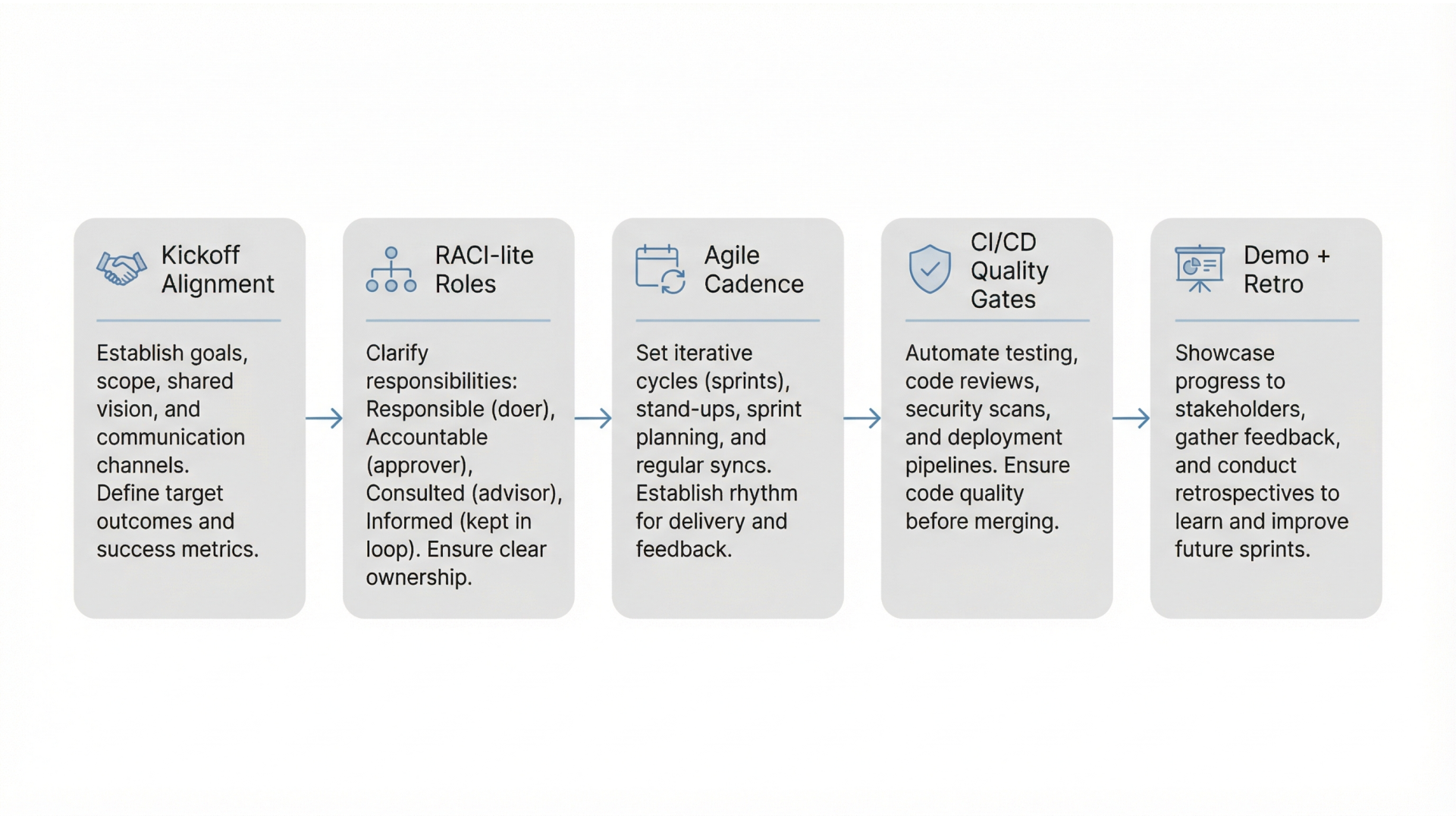
[.h5] A simple baseline:
- Product Owner (you): roadmap priorities, acceptance criteria, outcomes.
- Internal Tech Lead (you): architecture guardrails, security baseline, integrations.
- Partner Delivery Lead: sprint execution, staffing, delivery reporting.
- Shared QA Owner: test strategy, regression gates, release readiness.
If you don’t name these roles, you’ll get invisible work and slow decisions.
Decision rights prevent churn
Make it explicit who decides scope cuts, tech choices, release timing, and budget changes. Lack of clarity here is the #1 source of avoidable rework.
Co-development vs outsourcing vs dedicated team
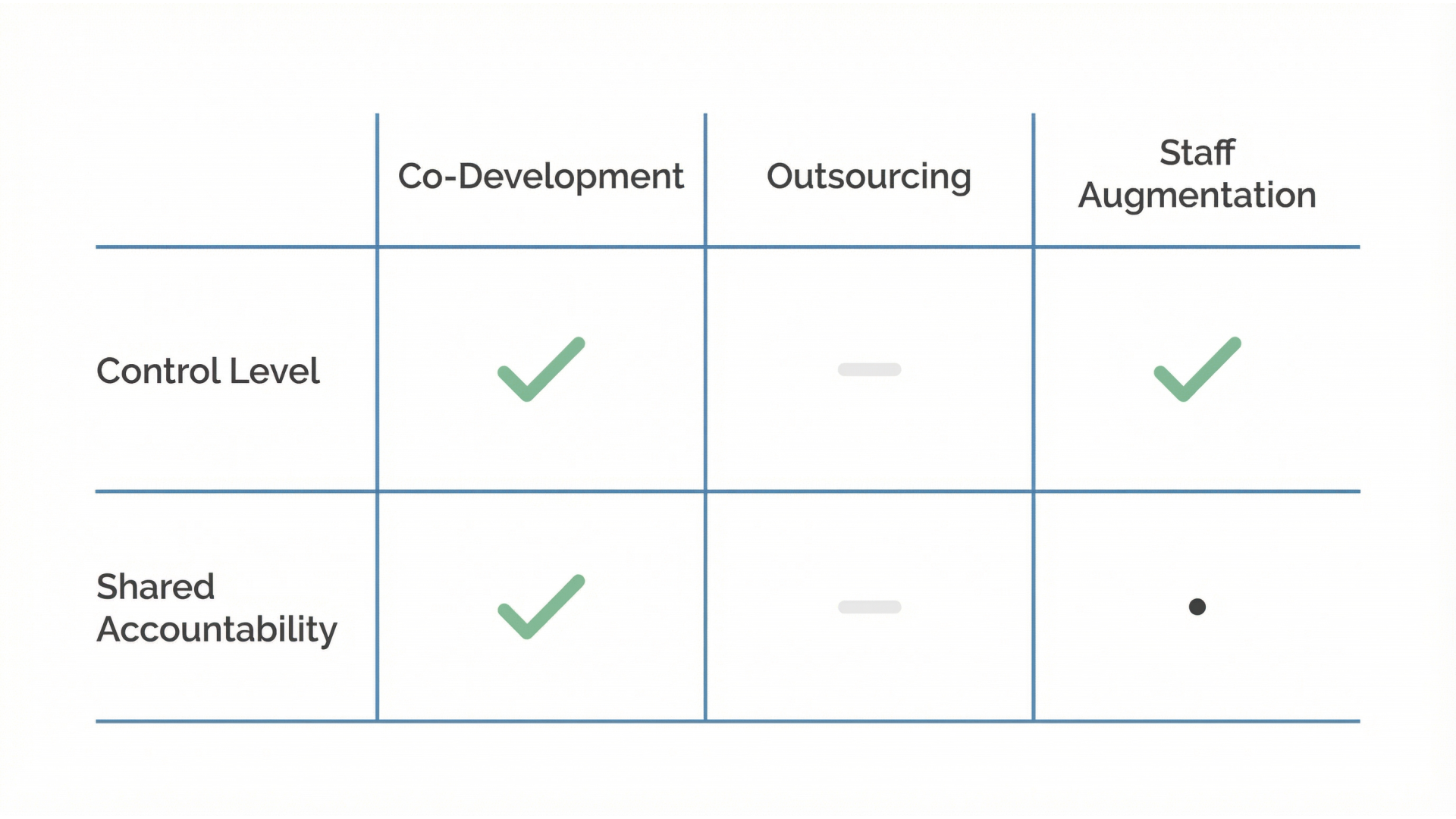
| Model | Best for | Pros | Tradeoffs |
|---|---|---|---|
| Co-development | Internal core team wants speed + control | Shared ownership, strong feedback loops, scalable expertise | Requires clear governance and decision rights |
| Software development outsourcing | Well-defined scope, fixed deliverables | Predictable handoffs, can be cost-effective | Misalignment risk if requirements evolve |
| Dedicated development team | Ongoing roadmap with predictable capacity | Stable velocity, team continuity | Needs strong product leadership and process |
| Fully in-house | Core IP with strong hiring ability | Maximum control, tight culture | Slower hiring, higher fixed costs, skill gaps |
If your main constraint is speed-to-MVP and validation, co-development often pairs well with structured discovery and iteration. Explore our MVP Development Services.
Key features to look for in co-development tools
- Version control + PR workflows (GitHub/GitLab/Bitbucket): protected branches, required reviews, CI checks
- Issue tracking for shared ownership (Jira/Linear): clear epics, acceptance criteria, sprint reporting
- CI/CD with reproducible environments: consistent builds, automated tests, deploy pipelines
- Documentation + decision logs (Confluence, Notion, GitHub wiki): ADRs, runbooks, onboarding
- Security controls: SSO, least-privilege access, secrets management, audit logs
Tip
Treat security as code: policy-as-code for access, scanning in pipelines, and automated compliance evidence capture.
Best practices (and common mistakes)
Best practices
[ListCheck]
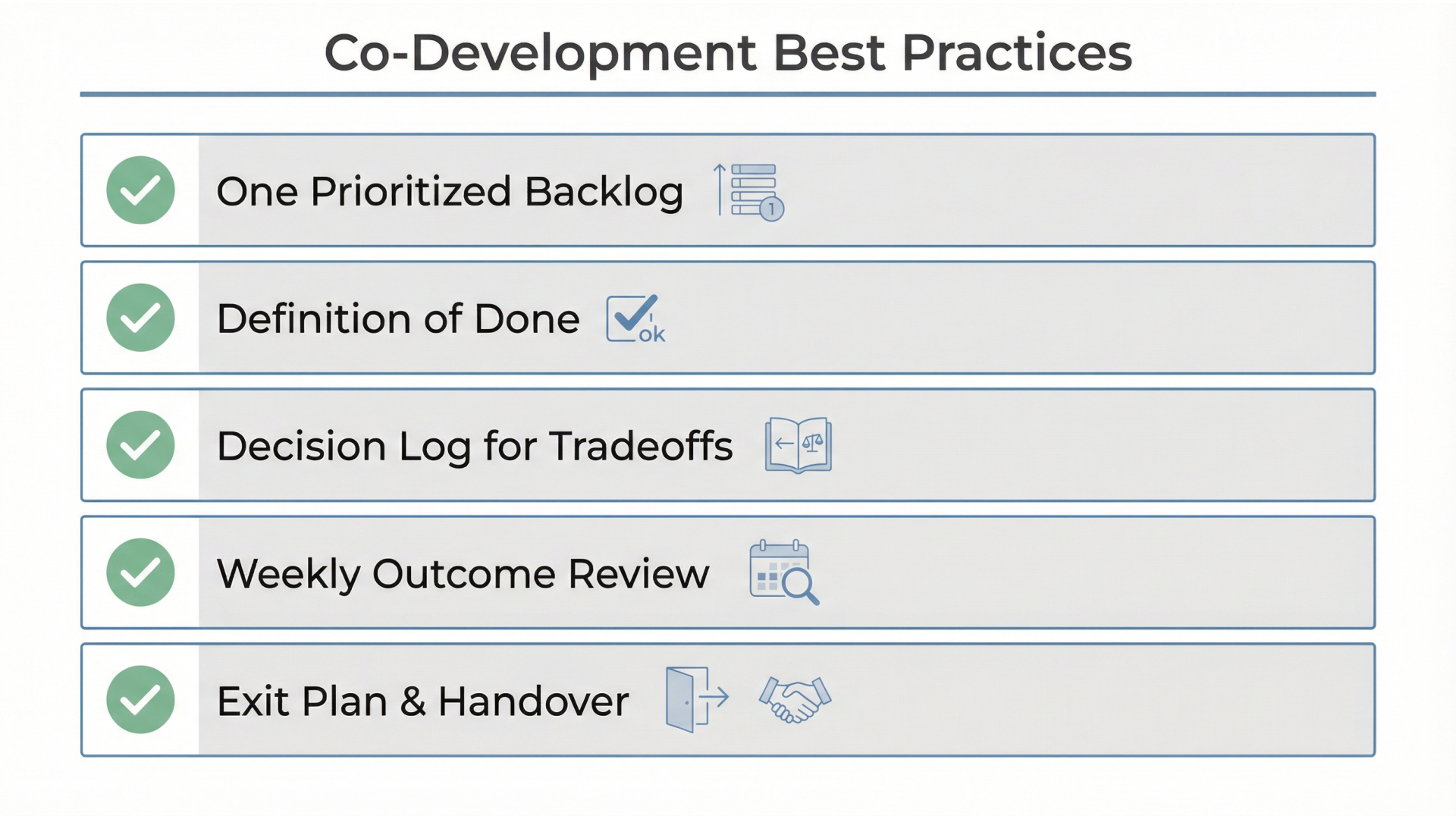
- Start with a joint discovery sprint (1–2 weeks) to align on users, success metrics, and architecture direction.
- Make decision rights explicit across scope, tech choices, release timing, and budget changes.
- Use a shared quality bar: linting, tests, code review rules, performance budgets.
- Instrument delivery: cycle time, escaped defects, deployment frequency, uptime.
- Create an exit plan: documentation, repo ownership, handover timeline, knowledge transfer.
[/ListCheck]
Common mistakes to avoid
- No single backlog → duplicate work and conflicting priorities
- Ambiguous ownership → approvals stall and quality becomes subjective
- Skipping onboarding → new partner devs ship slower and break conventions
- Weak IP/security clauses → legal and compliance risk later
- Measuring “hours†instead of outcomes → incentives drift from product value
Co-development agreement checklist
This is not legal advice—use it to guide counsel discussions:
- IP ownership & licensing (who owns what, when it transfers)
- Confidentiality & data handling (including subprocessor rules)
- Security baseline (required controls, incident response SLAs)
- Acceptance criteria & Definition of Done (tied to payment milestones)
- Change control (how scope changes are approved and priced)
- Termination & transition support (handover, documentation, repo access)
If you’re vendor-evaluating, our software strategy consulting can help you build a partner scorecard and delivery governance model before you sign.
Frequently Asked Questions
Co-development software is a collaborative approach (and supporting toolchain) where multiple teams—often an internal team and an external partner—build the same product together with shared workflows, codebases, and delivery accountability.
How Musketeers Tech can help
At Musketeers Tech, we help teams use co development software effectively by establishing a clear operating model (roles, governance, cadence) and executing with strong engineering fundamentals—code review discipline, CI/CD automation, and measurable product outcomes.
If you’re launching a new product or need to accelerate delivery without losing control, we support discovery, MVP build, and scale-up—often in a co-development structure where your internal team stays close to decisions while we provide specialized execution capacity.
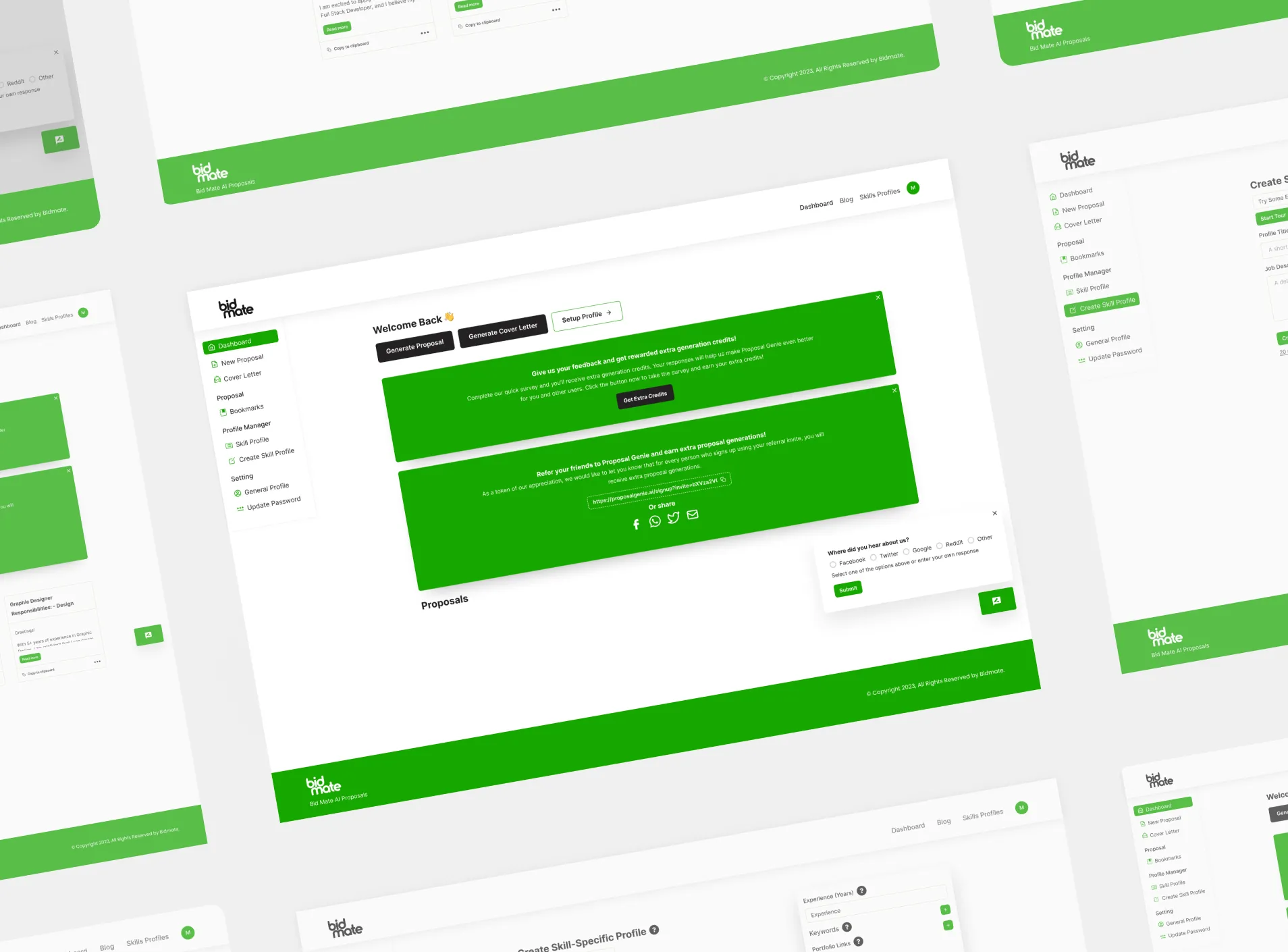
Explore examples in our portfolio—including solutions like BidMate (AI assistant) and DoctorDost (operations & scheduling platform).
CTO as a Service
Establish governance, security baselines, and a co-development operating model.
MVP Development
Validate quickly with shared backlogs, rapid sprints, and measurable outcomes.
Strategy & Vendor Scorecards
Pick the right partner with a clear evaluation framework and delivery playbook.
Final thoughts
Co development software is less about picking a tool and more about choosing a collaboration model that protects speed and product quality. The teams that win treat it like a shared operating system: one backlog, clear decision rights, consistent quality gates, and a contract that removes ambiguity around IP, security, and handover.
If you’re comparing co-development to software development outsourcing or a dedicated development team, anchor your choice on what you need most—control, speed, specialization, or long-term capacity—and design governance to match.
Get Started Nearshore Guide What Is Offshore Dev?- co development software
- software co development
- software development partnership
- software development outsourcing
- nearshore software development
- dedicated development team
